
Red Scarf Girl
Cultural Revolution in China

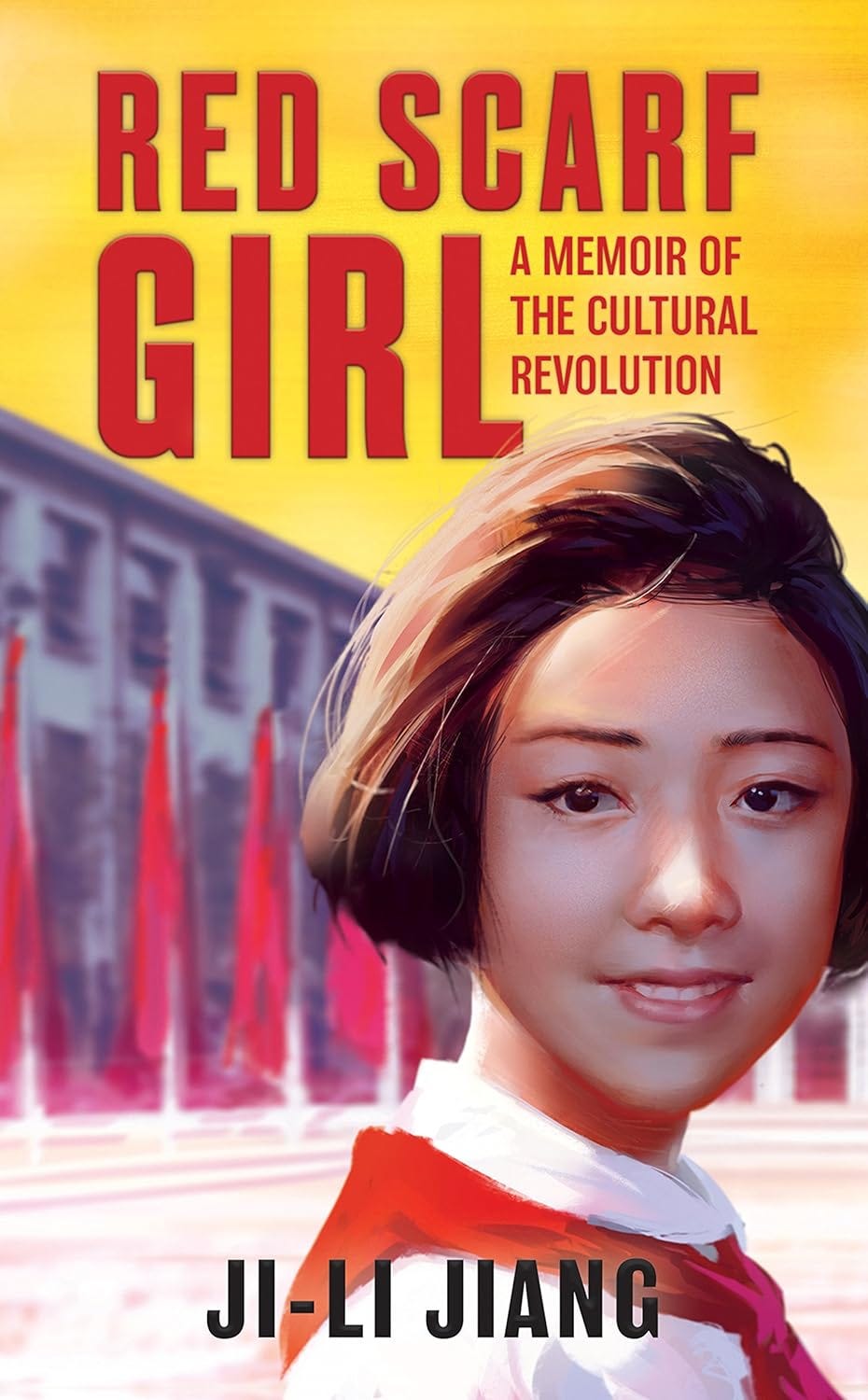
In 1966, at the beginning of Mao’s Cultural Revolution in China, Ji-Li Jiang was 12-years old. She was an ambitious student who loved her native China and, like most of her classmates, worshiped and adored Chairman Mao. Completely brainwashed by communist propaganda, she begins to doubt herself and even despise her family background as she discovers her “bourgeois roots.” Since her grandfather, who died when her father was seven, had once been a rich landlord, her whole family was labeled “Black,” and she could not participate in society as a good “Red” unless she denounced her parents. Ji-Li struggles with her ambitions to succeed, her love of China and Chairman Mao, and her loyalty to her family. As the Cultural Revolution proceeds, she loses status, academic opportunities, friends, relatives, and possessions. Success becomes a distant dream. Can she and her family even survive?
Red Scarf Girl by Ji-Li Jiang is the author’s autobiographical sketch of her early teen years during the Communist Cultural Revolution in China. The parallels between the Cultural Revolution and the events in America in 2020 and 2021 are startling. Although America’s cultural revolution did not go as far as China’s, the beginnings of the Maoist madness were certainly evident.
Notes: The Jiang family has Muslim roots and, although the family has mostly accepted the atheistic teachings of Mao, there are two times when Allah’s name is invoked in prayer. The book includes several D swear words. Most of the hardships Ji-Li herself experiences are social, psychological, and economic. Her father is imprisoned. Her grandmother is forced to sweep the street. She sees some adults beaten or forced to kneel for extended periods on rough surfaces. The reader is given some insight into the Chinese mindset on “saving face” and “losing face.” Throughout the book, Ji-Li never questions Mao’s goodness and rightness. As she explains in the epilogue, her brainwashing had been complete. She, along with many Chinese, did not wake-up to Mao’s cruelty and corruption until he died in 1976. The reading level of the book would make it appropriate for middle school ages, but I would recommend parental guidance at that age.